The Politics of Fitness (Warning: Canadian Content. Sorry)

When healthy is conflated with wealthy.

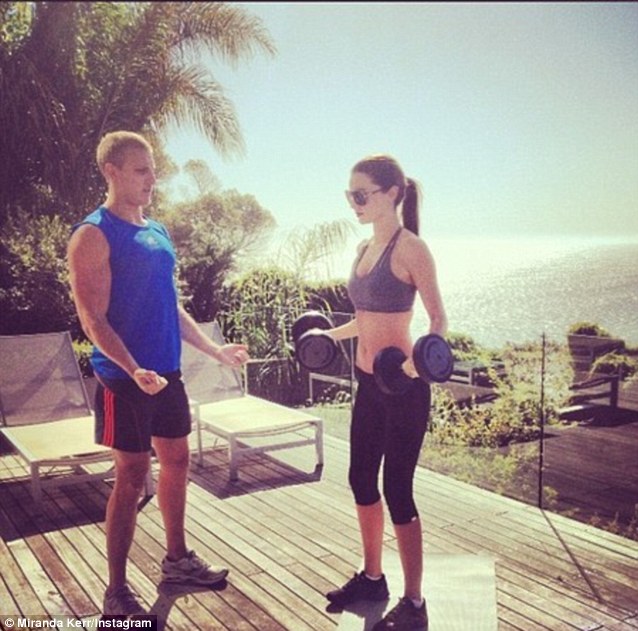
When healthy is conflated with wealthy. Miranda Kerr, supermodel.

Normally I use the term “politics” in the broadest sense, to analyze how everyday interactions are produced within dynamics of power (i.e. visual politics, sexual politics, body politics). Fitness is certainly political in this way, especially now that it is increasingly linked with elite forms of consumption. Just look at how fashion model Miranda Kerr poses for a supposedly candid “healthie” that shows her working out in a luxurious beach home with a personal trainer. IMHO both of them should be doing legs instead of bis, but that is neither here nor there. This image directly links Kerr’s “healthy” lifestyle with privilege. It also rejects and remakes the conventions of a gym selfie, something I am tempted to say more about. I recently revised an article about gym selfies for a scholarly journal, railing against the way in which scholars lump all fitness images together and never look closely at them. This post is, however, more banal. It considers how politicians associate themselves with health and fitness as part of their election campaigns. Continue reading

2014 Blog Stats for FFG

The WordPress.com stats helper monkeys prepared a 2014 annual report for this blog.

Here’s an excerpt:

The Louvre Museum has 8.5 million visitors per year. This blog was viewed about 75,000 times in 2014. If it were an exhibit at the Louvre Museum, it would take about 3 days for that many people to see it.

Click here to see the complete report.

Is Body Image Overrated?

Featured

Are these bodies "really" that diverse? Dove Real Beauty Campaign Ad.

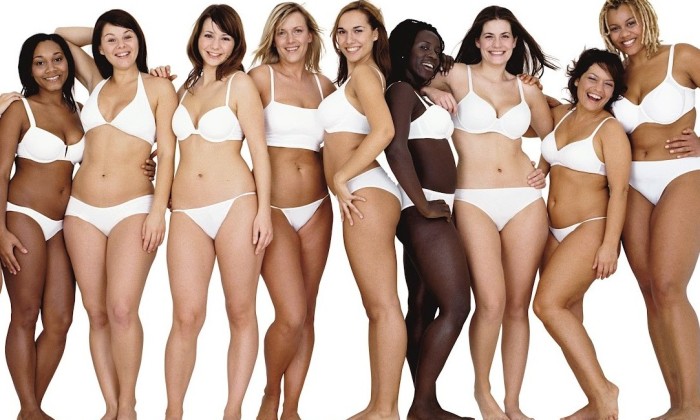
Are these bodies “really” that diverse? Dove Real Beauty Campaign Ad.

In her book Becoming Women: The Embodied Self in Image Culture (2014), Carla Rice reconfirms the commonsense notion that North American popular culture—filled with images of thin white women—damages women’s self-esteem by sending narrow messages about what women should look like. Because the mass media’s standard of beauty excludes 99% of ladies, it encourages them to develop such issues as body dysmorphia and eating disorders. Rice predictably lobbies for more diverse pictures of women. About a decade ago she served as a consultant to Dove, helping that company develop its “Real Beauty” advertising campaign. It was begun in 2004 after surveys revealed that only 4% of women consider themselves beautiful. Rice urged Dove to appeal to women’s desire for acceptance rather than judgement, admitting that the final (highly controversial) advertisements continued to feature attractive women with flawless skin.

Jo Spence and Tim Sheard, Exiled, 1989. From Narratives of Dis-ease (1989).

Jo Spence and Tim Sheard, Exiled, 1989. From Narratives of Dis-ease (1989).

Yet Dove was late to the party. For decades artists and scholars have intervened in dominant image culture, offering alternative images of fat, sick, differently abled, and lesbian bodies, among others. Artist Jo Spence is well known for scrawling “Monster” across her chest, taking photographs of her cancer treatments in an effort to reclaim and de-medicalize her suffering body. Such transgressive images are much more effective than those produced by Dove, though they have less popular circulation.

While I agree that the current beauty standard is ridiculously limiting, and support the display of diverse female bodies, I think that image culture receives too much attention and has in fact become a scapegoat for women’s body problems.  Continue reading